
Estate Wedding Planning: What It Actually Takes
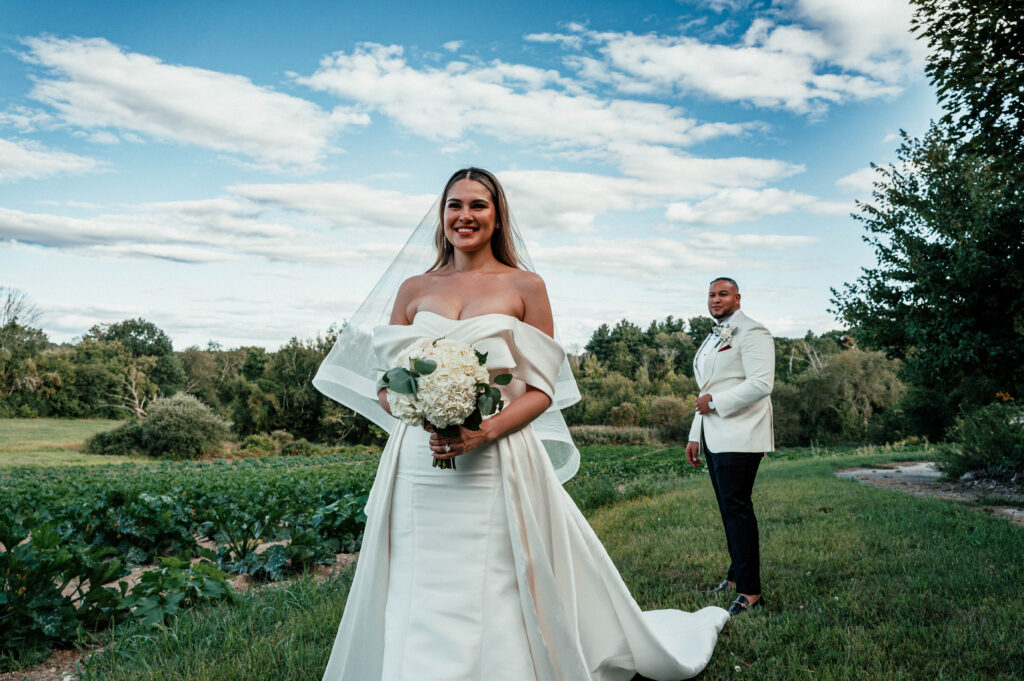
There’s a particular kind of quiet that happens the moment a couple walks a property for the first time. Nobody’s talking about seating charts. Nobody’s checking Pinterest. It’s just the two of you, standing on land that feels like it already knows something about your story.
And then, almost immediately, the question surfaces: can we actually do this here?
That question deserves a real answer—not a Pinterest caption. So let’s talk about what an estate wedding actually is, what it takes to pull one off, and why the property you fall in love with isn’t always the property you should book.
What We Mean by an Estate or Private-Property Wedding
When we say estate wedding, we mean something specific. It’s a private property—often family-owned, sometimes a working vineyard or ranch—that gives you privacy plus real scale. Picture a property like Black Stallion in Corolla,NC: rolling grounds, working history, the feeling that you’re a guest on someone’s land instead of a number on a venue calendar.
That’s different from a traditional venue, which already has the parking lot, the commercial kitchen, and the liability waiver sorted for you. Private property gives you none of that upfront—and all of that possibility.
Most of our destination couples land here for the same reason. They want privacy and a personal feeling. But they also want the working kitchen, the bar setup, the valet, the flow—the bells and whistles a full-service venue hands you automatically.
Two Very Different Kinds of “Estate Wedding”
Here’s where it gets confusing, so let’s be precise.
Some properties are called estates and function as full wedding venues. They have on-site accommodations, a commercial kitchen, event staff, and permits already secured. You’re booking a business that happens to look like a private home. That’s a real, wonderful option—and the planning conversation is closer to booking any traditional venue.
A family-owned estate is a different animal entirely. This is land someone actually lives on, or land that’s been in a family for generations. There’s no built-in event staff. There’s no commercial kitchen waiting for your caterer. There’s no wedding coordinator on the property’s payroll walking you through what’s allowed. Everything—the power, the parking, the permits, the kitchen, the rain plan—has to be built from nothing, specifically for your one weekend.
That distinction matters before you say yes to anything. Getting ready and hosting your wedding at a commercial estate venue is a different experience, with a different scope of work, than doing the same thing on land your family has owned for fifty years.
Can a Private Property Actually Become a Venue?
Technically, yes. Practically, it depends on zoning. Before you fall further in love with a property, we’re already asking these questions on your behalf.
Is the parcel zoned for commercial or event use? Local governments regulate this closely. Some counties require a minimum acreage, a conditional use permit, or a cap on annual events.
What does the noise ordinance say? Most towns enforce a hard curfew on outdoor sound, sometimes as early as 9 or 10 p.m.
Does a guest-count cap tied to fire code apply? Even gorgeous estates often hit a hard legal limit.
Is there a required buffer between the celebration and neighboring property lines? Many zoning codes demand 100 to 200 feet of distance.
What It Actually Takes to Execute a Private Estate Wedding
Here’s the part we don’t say enough out loud: we understand what it takes to execute these events seamlessly, while protecting both your guest experience and the integrity of the property itself.
Our role goes far past traditional wedding planning. We manage the entire operational framework behind the celebration—coordinating vendor logistics, installation schedules, production timelines, and on-site execution so every detail functions as one cohesive machine, from the first truck that pulls onto the property to the final breakdown at the end of the night.
Whether you’re picturing an intimate estate dinner party or a full tented wedding weekend, private estate events demand strategic oversight and a team that has actually navigated the specific chaos these properties create. This is not a space where you improvise on-site.
Private estate wedding planning may include tent and flooring coordination, pool coverage installations, catering infrastructure and kitchen tent management, rental coordination and large-scale logistics, power and generator management, weather contingency planning, guest transportation and parking logistics, vendor production schedules and site management, property protection and load-in/load-out oversight, and full wedding weekend coordination and execution.
The Logistics Nobody Photographs
This is the part of estate weddings that never makes it to Pinterest. It’s also the entire reason our job exists.
Rain plan. That view has zero backup unless someone builds one. We map out where the tent goes, what the flooring plan looks like on soft ground, and how fast we can flip the ceremony space if weather turns an hour before you walk down the aisle.
Guest flow. Nothing on a private property is pre-marked for you. We design how guests enter, move to cocktail hour, and find the reception before we ever touch a tablescape.
Parking and valet. Residential driveways can’t hold fifty cars. We decide early whether guests self-park, whether valet makes more sense, or whether shuttles from an off-site lot solve the problem.
Insurance. A privately hosted wedding needs its own event liability coverage. We also require every vendor on-site to carry their own.
Why This Matters Before You Sign Anything
A property that photographs like a venue isn’t automatically ready to function like one. The couples with the smoothest estate weddings had these conversations before falling emotionally—and financially—attached to the space.
We do this work before florals. Before linens. Before a single design decision gets made. Based in Tulsa and serving select celebrations across Oklahoma, Missouri, Georgia, Florida, the Carolinas, New York, New Jersey, and destinations worldwide, we’ve built our process around exactly this kind of property. If you’re circling a family estate or private property for your wedding weekend, this is what we walk through in a Wedding Planning Strategy Session.
Stay tuned for next week. We’re breaking down Airbnb and VRBO weddings—a completely different conversation from an estate, and one reason so few listings actually allow it.


Be the first to comment